Jean Baudrillard’s seminal work explores how contemporary society increasingly operates through simulations,
where signs and symbols replace reality, creating a hyperreal world detached from any tangible basis.
Historical Context of Baudrillard’s Work
Jean Baudrillard, a prominent French sociologist, philosopher, cultural theorist, and photographer, developed his theories during the latter half of the 20th century, a period marked by rapid technological advancement and the burgeoning influence of mass media. His work emerged from a post-structuralist intellectual climate, engaging with thinkers like Marx, Saussure, and McLuhan.
Baudrillard’s early writings critiqued consumer culture and the object system, analyzing how commodities acquire symbolic value beyond their practical use. He observed a shift from a society focused on production to one dominated by consumption and simulation. The 1981 publication of “Simulacra and Simulation” was a pivotal moment, reflecting anxieties about the increasing mediation of reality through media and technology, and the potential for a loss of the “real” itself. This work built upon earlier explorations of symbolic exchange and death.
The Core Concept: Simulacra and Simulation
At the heart of Baudrillard’s theory lies the distinction between the real and the simulacrum. A simulacrum is a copy without an original; it’s a representation that precedes and determines reality, rather than reflecting it. Simulation is the process by which these simulacra come to dominate our experience, obscuring the line between the real and the artificial.
Baudrillard argues that contemporary society has entered an era of simulation where signs no longer refer to a concrete reality but to other signs. This creates a self-referential system, a “hyperreality,” where the distinction between representation and reality collapses. He famously stated, “The simulacrum is never what hides the truth – it is truth that hides the fact that there is none.” This signifies a fundamental shift in how we perceive and interact with the world.

Understanding the Stages of the Simulacrum
Baudrillard outlines a progression of simulacra, moving from faithful representation to a complete detachment from reality, culminating in pure simulation.
The First Order: Representation
Initially, the image is a clear signifier of a real thing; it faithfully represents an existing reality. This is the stage of traditional representation, where signs clearly point to what they signify – a portrait resembling the person, a map accurately depicting terrain.
However, Baudrillard argues even this initial stage isn’t innocent. The act of representation inherently involves a selection and framing, a distortion even in its attempt at accuracy. It’s not a perfect mirror, but a constructed image of reality, not reality itself.
This foundational order establishes the basis for subsequent stages, where the relationship between sign and referent becomes increasingly unstable and ultimately collapses, paving the way for the precession of simulacra.
The Second Order: Masking and Perversion of Reality
Here, the sign begins to mask and distort reality, no longer aiming for accurate representation but concealing an underlying absence. This isn’t a straightforward lie, but a misrepresentation that acknowledges the existence of a real thing it’s failing to truthfully portray.
Think of counterfeit goods – they attempt to mimic the original, but their very existence reveals the lack of authenticity. Or consider idealized images in advertising, presenting a perfected version of life that obscures its complexities and imperfections.

This stage introduces a sense of deception, where the sign points to a reality it simultaneously denies or perverts, creating a tension between appearance and truth. It’s a critical step towards the complete dissolution of the real.
The Third Order: Pretense of Reality (Simulacra)
At this stage, the sign pretends to be a faithful copy, but it has no original to copy. It’s a simulation of something that never existed, a pure fabrication presented as reality. These are simulacra – copies without originals.
Consider historical reenactments or theme parks; they offer experiences designed to feel authentic, but are constructed realities devoid of genuine historical connection. They aren’t masking a reality; they are creating a self-referential world.
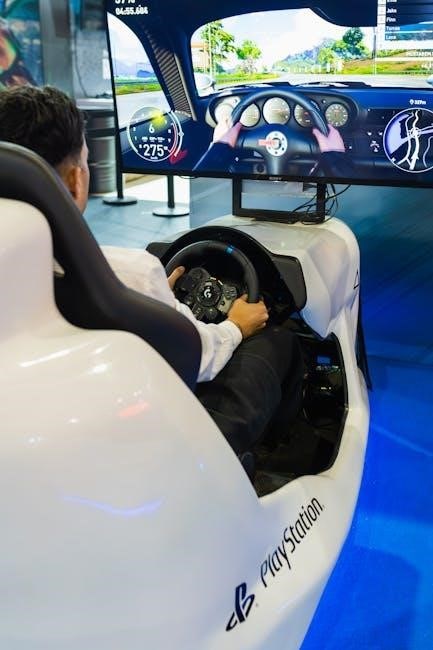
The simulacrum generates its own reality, becoming more “real” than the real itself. This order marks a significant shift, as the distinction between representation and reality begins to blur, paving the way for hyperreality.
The Fourth Order: Pure Simulacrum (Simulation)
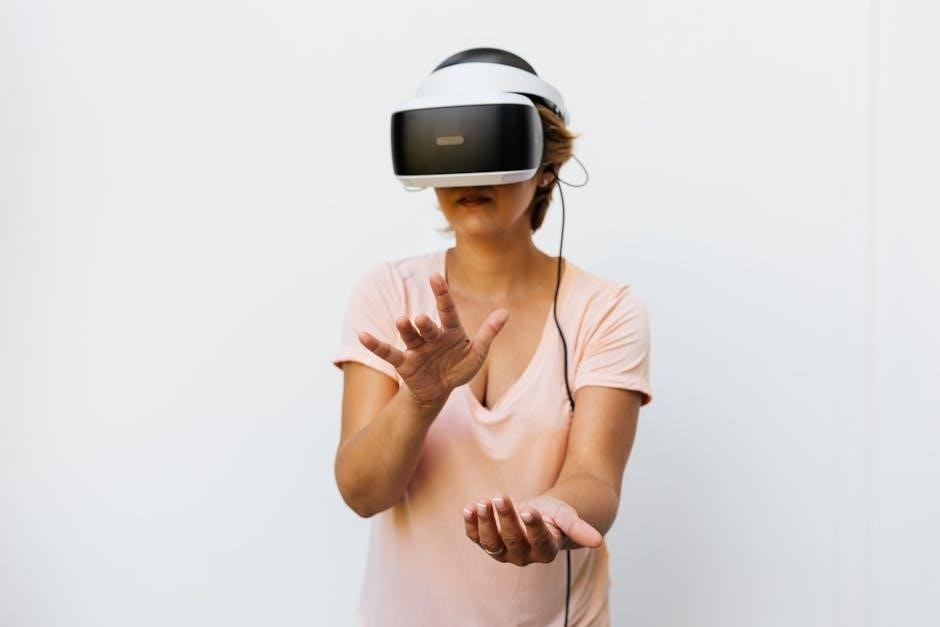
This final stage represents the complete collapse of meaning and the real. Simulation isn’t about imitating reality; it becomes reality. There is no longer any reference to an original, no distinction between the sign and the signified. It’s a hyperreal condition where the map precedes the territory.
Baudrillard argues that the Gulf War, as mediated by television, exemplifies this. The war wasn’t experienced directly, but through carefully curated media representations, creating a simulation of conflict divorced from actual events.
The simulacrum generates its own internal logic, a self-referential system where signs refer only to other signs. This leads to a loss of grounding in the real, and a proliferation of surfaces without depth, ultimately defining the postmodern condition.

Key Concepts within the Theory
Central to Baudrillard’s framework are hyperreality, the loss of the real, and implosion – concepts describing a society saturated with simulations and signs.
Hyperreality and its Characteristics
Hyperreality, a cornerstone of Baudrillard’s theory, signifies a condition where the distinction between reality and simulation blurs, ultimately collapsing into one another. It’s not merely a representation of reality, but a reality constructed from simulations. This manufactured reality often feels more real than the “real” itself, becoming preferable and more readily consumed.
Key characteristics include the precession of simulacra – where signs precede and determine the real, rather than reflecting it – and a reliance on models and simulations that lack any original referent; Disneyland, for example, isn’t attempting to represent America; it is a hyperreal America, offering a sanitized and idealized version. This creates a sense of detachment and a loss of authenticity, as individuals increasingly interact with copies without originals, leading to a diminished capacity to discern truth from fabrication.
The Loss of the Real
Baudrillard argues that the proliferation of simulacra doesn’t simply distort reality; it actively erodes and ultimately eliminates it. As simulations become self-referential and detached from any grounding in the “real,” the very concept of the real loses its meaning and coherence. We are left navigating a landscape of signs that signify nothing beyond themselves, a perpetual loop of representation without an original.
This isn’t a lament for a lost authenticity, but an observation of a fundamental shift in the structure of experience. The “real” isn’t destroyed by falsification, but by its own saturation. The constant bombardment of images and simulations creates a sense of indifference and apathy, as individuals become desensitized to genuine experience. Consequently, the search for meaning in a “real” world becomes futile, replaced by a passive acceptance of the hyperreal.

Implosion and the Dissolution of Meaning
Baudrillard’s concept of “implosion” describes the process by which the distinction between reality and simulation collapses, not through a violent rupture, but through a silent and pervasive absorption. This isn’t simply a blurring of boundaries, but a complete erasure of the difference, leading to a homogenization of experience where meaning itself dissolves.
As simulations become increasingly sophisticated, they no longer reflect or distort reality; they become reality. This results in a feedback loop where signs refer only to other signs, creating a self-contained system devoid of external reference. Consequently, traditional notions of truth, falsity, and representation lose their purchase, leaving individuals adrift in a sea of undifferentiated information. The very categories through which we understand the world begin to disintegrate, fostering a sense of disorientation and nihilism.
Examples and Applications of the Theory
Baudrillard illustrates his ideas through analyses of Disneyland, the Gulf War, and media, demonstrating how these phenomena operate as self-referential simulations.
The Precession of Simulacra: Disneyland as an Example
Baudrillard famously uses Disneyland to exemplify the “precession of simulacra.” He argues that Disneyland isn’t merely a representation of America, but rather presents itself as a perfect, idealized version – a hyperreality. This hyperreality, he contends, precedes and determines the “real” America, effectively masking the contradictions and imperfections of actual American life.
Disneyland functions as a self-contained world, offering a sanitized and controlled experience. It doesn’t hide the fact that it’s unreal; instead, it openly proclaims its artificiality. This very acknowledgement, however, is crucial. By presenting itself as a simulation, Disneyland paradoxically becomes more “real” than the real, influencing our perceptions and expectations of reality itself. It’s a model of how simulations can generate their own reality, eclipsing and ultimately replacing the genuine.
The Gulf War and the Simulation of Conflict
Baudrillard applied his theory to the Gulf War, controversially arguing it didn’t happen in the traditional sense, but was a hyperreal event mediated entirely through television. The war, he claimed, was experienced as a simulation – a series of sanitized images and narratives devoid of genuine engagement with the reality of conflict.
He posited that the public’s perception was shaped not by direct experience, but by media representations, creating a simulated war far removed from the actual suffering and destruction. The precision bombing, presented as a clean and technologically advanced spectacle, further contributed to this hyperreality, obscuring the messy and brutal realities of warfare. This detachment, Baudrillard argued, signified the complete precession of the simulacrum, where the map (the media representation) precedes and defines the territory (the actual war).
Media and the Construction of Reality
Baudrillard argues that media doesn’t simply reflect reality; it actively constructs it, generating simulations that increasingly dominate our experience. Through constant bombardment of images and information, media creates a hyperreal environment where the distinction between the real and the simulated becomes blurred, ultimately collapsing.
This process involves the endless reproduction of signs and symbols, detached from any original referent, leading to a world of simulacra. News, entertainment, and advertising all contribute to this construction, presenting curated versions of reality that prioritize spectacle and narrative over authenticity. Consequently, our understanding of the world is mediated, shaped, and often entirely fabricated by these simulated representations, fostering a detachment from genuine experience.
Criticisms and Interpretations
Baudrillard’s theory faces critique for its perceived pessimism and lack of concrete political strategy, yet profoundly influences postmodern thought and cultural analysis.
Postmodernism and Baudrillard’s Influence
Baudrillard’s work is inextricably linked with postmodernism, offering a critical lens through which to examine the erosion of grand narratives and the increasing dominance of signs over substance. His concepts resonated deeply with postmodern thinkers questioning objective truth and embracing subjectivity.
He provided a theoretical framework for understanding the shift from a society based on production to one centered on simulation and consumption, a key tenet of postmodern analysis. His ideas challenged traditional Marxist critiques, arguing that capitalism had moved beyond simply exploiting material conditions to manipulating signs and creating a hyperreality.
Influential figures across disciplines—from cultural studies to architecture—have engaged with Baudrillard’s theories, applying them to analyze contemporary phenomena like media, art, and consumer culture. His work continues to provoke debate and inspire new interpretations within postmodern thought, solidifying his position as a pivotal theorist of the late 20th and early 21st centuries.
Debates on the Political Implications
Baudrillard’s theory sparks considerable debate regarding its political implications. Critics question whether his emphasis on the all-encompassing nature of simulation leaves room for resistance or genuine political action. Some argue his work fosters a sense of political apathy, suggesting that the “real” is irrevocably lost, rendering critique futile.
Conversely, others contend that recognizing the simulated nature of power structures is itself a form of political awareness, enabling a strategic disruption of the hyperreal. His analysis of the Gulf War, for example, highlighted the media’s construction of a conflict devoid of genuine stakes, prompting reflection on the manipulation of public opinion.
The debate centers on whether Baudrillard offers a paralyzing diagnosis or a radical call to rethink political engagement in a world saturated with signs and simulations, demanding new strategies beyond traditional political frameworks.
The PDF and its Significance
“Simulacra and Simulation” PDFs offer widespread access to Baudrillard’s influential ideas, fostering academic study and broader engagement with postmodern thought globally.
Availability and Access to “Simulacra and Simulation” PDF
“Simulacra and Simulation” by Jean Baudrillard is readily available in PDF format through various online platforms, including the Internet Archive, where it can be borrowed or streamed. Amazon.com also offers the book, though primarily in physical form, with associated shipping costs. The ease of digital distribution has significantly broadened access to this complex philosophical text, allowing students and researchers worldwide to engage with Baudrillard’s theories without the constraints of traditional publishing and library systems.
However, users should exercise caution regarding the source of downloaded PDFs to ensure legitimacy and avoid potential malware. The Internet Archive provides a relatively secure and reliable source, offering both lending and direct access options. Furthermore, the proliferation of digital copies highlights the text’s enduring relevance and continued influence within academic discourse, demonstrating how readily accessible knowledge can shape contemporary thought.
Impact of Digital Distribution on the Text
The widespread digital distribution of “Simulacra and Simulation” ironically mirrors the very concepts Baudrillard explores – the blurring of reality and representation. The ease with which a PDF copy can be replicated and shared contributes to a hyperreal existence of the text, detached from its original material form. This accessibility has undeniably democratized engagement with his work, fostering broader discussion and critique.
However, this proliferation also raises questions about authorship, authenticity, and the value of the original. The text itself becomes a simulacrum, endlessly reproduced and circulated, potentially divorced from its historical context. The digital realm, therefore, doesn’t simply deliver the text; it actively participates in the simulation of its meaning, amplifying the core themes of the book in a self-referential loop.